Earn 2.5% p.a. interest on your Uniplus Account when you invest or insure with us.
Now enhanced to make your money work harder as you save and invest or insure with UOB. Subject to qualifying criteria. T&Cs apply. SGD deposits are insured up to S$100k by SDIC.
Explore UOB's range of savings accounts and credit cards designed around your banking needs. Get started by entering your friend's referral code here. Subject to qualifying criteria. T&Cs apply.
Investment guru or fake guru? Six scam ‘fakes’ Singaporeans should watch out for
Prevent
12 Aug 2026
5 min read
You are now reading:
Investment guru or fake guru? Six scam ‘fakes’ Singaporeans should watch out for
Key takeaways
Scammers increasingly rely on deception, using tactics like fake investment groups on messaging platforms, deepfakes, fake business opportunities and malvertising to manipulate victims into giving up money or sensitive information.
Pause and verify before acting. Independently confirm identities and requests, especially when money, personal information or urgent action is involved.
Set up Money Lock to better protect against unauthorised online withdrawals and download the ScamShield app to block known scam numbers.
One message. One ad. One phone call.
That’s all it takes to start a scam.
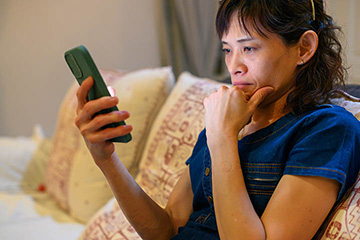
Today's scams don't always look suspicious. They can appear as a friendly WhatsApp message, a convincing social media ad, a trusted authority figure, or even an investment expert offering ‘free lessons’ or ‘get rich tips’ to stimulate interest.
Scammers now rely less on hacking and more on manipulation – also known as social engineering. Instead of breaking into accounts, they trick victims into handing over money, passwords or personal information themselves.
(The official term for this is ‘self-effected transfers’, which made up more than 80% of scam cases in Singapore last year.)
Here are six common ‘fakes’ driving scams today — and the warning signs to look out for.
1. The fake investment guru
One of the most common investment scams begins with a social media advertisement promoting 'free investment lessons', 'stock market coaching', 'AI-powered investing' or 'exclusive crypto trading signals'.
After clicking the ad, victims are invited to join a WhatsApp or Telegram group led by a supposed investment expert, with an ‘assistant’ who tries to build rapport and ascertain the victim’s investment experience and net worth. The group is filled with enthusiastic members sharing screenshots of impressive profits, success stories and tips. In reality, many of these ‘investors’ are part of the ruse.
After building trust, victims are persuaded to create an account on an investment platform that looks legitimate at first glance. They are encouraged to deposit funds and may even see apparent profits reflected in their account. As confidence grows, victims are persuaded to invest larger amounts to maximise their returns. Sometimes, victims are encouraged to borrow money or apply for loans to increase their investments.
The scam usually comes to light when they try to withdraw their money. Withdrawals are delayed, blocked, or made conditional on further payments. By the time victims realise the platform is not legitimate, they may have lost substantial sums and the scammers soon vanish.
Red flag: Be wary of investment opportunities promoted through social media, that direct you to investment chat groups on messaging apps. Genuine investment firms do not guarantee returns, pressure you to top up funds repeatedly, or require upfront payments to release your own money. If everyone in the chat group appears to be making easy money, there's a good chance the other members are part of the performance.
2. The fake face, voice or video
Thanks to advances in artificial intelligence (AI), scammers can now create convincing profile photos, polished messages, realistic voice recordings and deepfake videos that appear to feature trusted government officials or prominent businessmen.
Authorities in Singapore have repeatedly warned the public about deepfake videos and advertisements featuring prominent figures whose likenesses were used without their consent to promote investment schemes and other fraudulent messages. In a high-profile case, a victim lost millions after falling for a scam in which he attended a Zoom conference call with deepfakes of Prime Minister Lawrence Wong and other government officials1.
Scammers may use these fabricated identities to:
Request urgent fund transfers;
Promote fake investment opportunities or financial products;
Stage a kidnap or emergency involving a family member; or
Convince victims to share personal or banking information.
What makes these scams particularly dangerous is that traditional warning signs are becoming less reliable. The message may be professionally written. The voice may sound familiar. The person on screen may appear completely real.
However, seeing is no longer believing. In the age of AI, a familiar face or voice should be treated as a starting point for verification, not proof that something is genuine.
Red flag: Don't trust something simply because it looks or sounds authentic. If there's a request involving money, personal information or urgent action, verify it through an official website, known phone number or another trusted channel before proceeding.
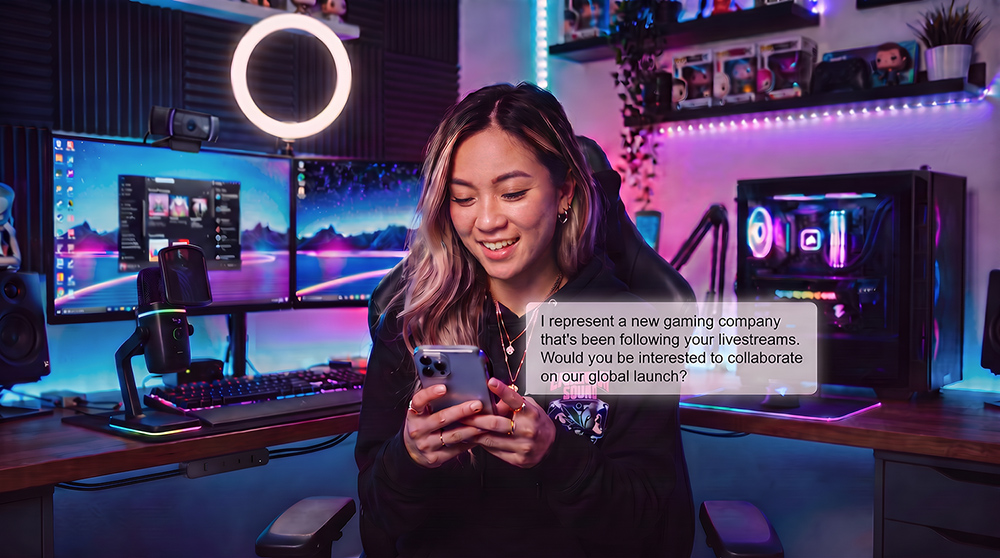
3. The fake business opportunity
Some scams hide behind a seemingly legitimate new business opportunity, with content creators, influencers, YouTubers, freelancers, and marketing professionals increasingly being targeted.
Victims receive an email, LinkedIn message or WhatsApp text offering a:
Partnership or sponsorship opportunity
Freelance project or consultancy assignment
Job offer
Media interview or speaking engagement
Collaboration with a recognised brand
Unlike traditional scams, there is often no immediate request for money. The scammer may spend days or weeks building credibility through professional conversations and realistic project briefs.
Always verify unsolicited messages received from unknown senders
Once trust has been established, the victim is asked to take a seemingly routine next step:
Download a project file
Review a proposal through a shared link
Install software needed for a meeting
Open an attachment
Grant remote access to ‘troubleshoot’ a technical issue
In some cases, the file or software contains malware designed to steal passwords, banking credentials or personal information. In others, victims are directed to fake login pages that appear to belong to trusted organisations or online services. Any credentials entered may be captured by scammers and used to gain access to email accounts or other systems, or to take over victim’s bank accounts.
Red flag: Be cautious if an opportunity requires you to download unfamiliar software, log in through an unexpected link or grant access to your device. Verify with the organisation independently before taking any action — especially if the opportunity appears unusually urgent or lucrative.
4. The fake advertisement or verification
Scammers increasingly use social media platforms, websites and online marketplaces to lure victims through ads offering huge discounts, viral products, software downloads and other attractive offers. Because these ads appear on familiar platforms, victims may assume they have already been vetted.
After clicking, victims are often directed to convincing websites designed to mimic trusted brands, businesses or online services. Some of these sites attempt to collect payment details, personal information or login credentials. Others use fake verifications to trick victims into downloading malware or granting cybercriminals access to their devices.
Victims may encounter:
Pre-orders for popular collectibles like Pokémon trading cards or K-pop merchandise;
Irresistible deals on luxury goods;
Banners that mimic browser alerts warning of a security issue;
Pop-ups claiming software or browser updates are required; or
Fake CAPTCHAs2 that claim verification has failed – victims are then asked to copy and paste text into the Windows Run box (Win+R) or launch Windows Terminal.
What makes fake verification scams particularly effective is that the warning signs often look reassuring rather than suspicious. The victim believes they are protecting themselves, when in fact they are following instructions created by the scammer.
Red flag: A legitimate CAPTCHA or verification prompt should never ask you to download software, grant remote access to your device, paste commands into your computer or provide information unrelated to the task you are trying to complete.
5. The fake friend
Fake friend scams typically begin with an unsolicited WhatsApp message or phone call from someone claiming to have changed their number.
The conversation often starts innocently:
"Hi, can you guess who I am?"
Or: "I've lost my phone and this is my new number."
Once the victim guesses the identity of a friend, colleague or relative, the scammer adopts that persona and continues the conversation. They may spend days building rapport through casual chats, checking in on family members or referring to everyday matters to make the interaction feel genuine.
Only after trust has been established does the request arrive.
The scammer may claim to be:
Paying a supplier or contractor;
Settling an urgent business expense;
Covering renovation costs;
Helping a family member in need; or
Facing temporary banking issues.
Because the request appears to come from someone familiar, victims often focus on helping rather than verifying.
Red flag: Be cautious whenever someone claims to have changed their mobile number and then requests money, personal information or urgent assistance. Before taking any action, contact the person through their known number or another trusted channel to verify the request.
6. The fake authority
This remains one of Singapore's most damaging scam tactics.
In these scams, fraudsters impersonate individuals or organisations that people instinctively trust, such as:
Police officers
Government agencies
Bank staff
Insurance representatives
Payment service providers
Regulators
The scam usually begins with an unsolicited call, message or email informing the victim that something is wrong. They may be told that their identity has been misused, a bank account has been compromised, or that they are linked to a criminal investigation.
To make the story more convincing, victims are sometimes passed from one ‘officer’ to another. Each person appears to confirm the previous person's story, creating the impression that the investigation is genuine.
The scammer then creates pressure by emphasising urgency, confidentiality or the risk of serious consequences if the victim fails to cooperate. Victims may be instructed to:
Transfer funds to a ‘safe’ account or another bank account for ‘verification’;
Convert funds into cryptocurrency;
Share banking credentials or one-time passwords (OTPs); or
Hand over cash or valuables to a courier or ‘undercover officer’.
What makes these scams particularly dangerous is that they exploit two very human instincts: trust in authority and fear of getting into trouble.
At UOB, our branch colleagues are trained to spot the red flags of potential scams. In 2025, through the efforts of our branch colleagues and the Bank’s enhanced surveillance system, we helped our customers prevent almost S$7.5 million in losses from impersonation scams.
Red flag: No legitimate government agency or bank will ask you to transfer money to protect it, surrender your banking credentials, or keep an investigation secret from your family members.
What you can do to protect yourself
Whenever a stranger makes an urgent request for money, information or immediate action, stop and ask:
Did I expect this contact? Unsolicited messages regarding investments, job opportunities, or urgent account issues carry a high risk of fraud.
Can I independently verify the person or organisation? Avoid using the contact information provided in the suspicious message. Visit the official website of the government agency, bank, or organisation, or call their official hotline to verify the claim.
Why is there urgency? Scammers manufacture panic to prevent you from thinking critically. If you hear phrases like "Don't tell anyone", "Act immediately", or "Your account will be frozen today", you are likely speaking to a scammer.
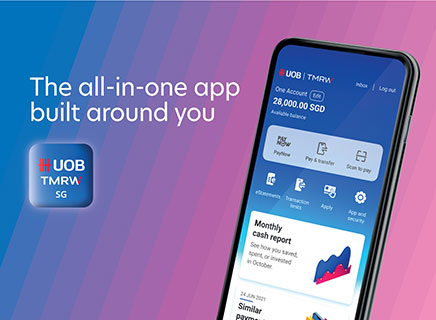
To better protect against unauthorised online withdrawals, you can set up Money Lock easily using UOB TMRW. Locked funds can only be unlocked at any UOB ATM in Singapore in person, with your request processed instantly.
You may also download the ScamShield app, which blocks known scam numbers and filters malicious SMS links. If you suspect your UOB account has been compromised, cease communication with the scammer immediately, and contact our dedicated 24/7 Fraud Hotline at 6255 0160 and the police.
Not every scammer looks like a scammer anymore. Exercise good digital hygiene and learn to protect yourself from the fake gurus, fake friends and fake authorities out there.
1Singapore Police Force, “Footage From Zoom Video Conference Involving Impersonation of Senior Government Officials,” Police News Releases, 16 May 2026, accessed 4 August 2026, https://www.police.gov.sg/Media-Hub/News/2026/05/20260516_footage_from_zoom_video_conference_involving_impersonation_of_senior_government_officials
2Cyber Security Agency of Singapore, “Ongoing ClickFix Campaign,” Alerts & Advisories, 10 July 2025, accessed 4 August 2026, https://www.csa.gov.sg/alerts-and-advisories/alerts/al-2025-068/
Important Notices and Disclaimers
This article is strictly for general information only. Nothing in this article constitutes accounting, legal, regulatory, tax, financial or other advice. If in doubt, you should consult your own professional advisers about issues discussed in this article. The information in this article is prepared based on public information as of the date of this article, all of which is subject to change at any time without notice. Although every reasonable care has been taken to ensure the accuracy and objectivity of this article, United Overseas Bank Limited (“UOB”) and its employees make no representation or warranty of any kind, express, implied or statutory, in respect of this article, whether in respect of its accuracy and completeness or otherwise, and accept no responsibility or liability for any error, inaccuracy, omission, consequence, injury, loss or damage howsoever suffered by any person, arising from any reliance by any person on, or otherwise in connection with, this article.