



The Travel Insider
Southeast Asia's first one-stop travel portal designed for UOB Cardmembers. Inspire, plan, and book your next adventure with UOB Cards.
Find out moreFeatured

Earn 2.5% p.a. interest on your Uniplus Account when you invest or insure with us.
Now enhanced to make your money work harder as you save and invest or insure with UOB. Subject to qualifying criteria. T&Cs apply. SGD deposits are insured up to S$100k by SDIC.
Find out moreCard Privileges
Card services

Cross over to your favorite deals in JB with UOB Cards
Tap your way to 0% FX fees, cashback on MYR spend and instant savings with UNI$ redemption.
Find out moreBorrow services

Balance Transfer
Get instant cash at 0% interest and low processing fees. Choose from 3, 6 and 12-months tenor.
Find out moreFeatured Solutions

Your access to Private Bank CIO’s expertise
Invest in funds powered by Private Bank CIO – United CIO Income Fund and United CIO Growth Fund.
Learn more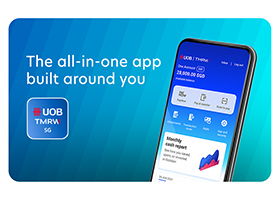
UOB TMRW
Meet UOB TMRW, the all-in-one banking app built around you and your needs.
Bank. Invest. Be rewarded. Take charge with UOB TMRW.

-
you are in Personal Banking

For Individuals
Wealth BankingPrivilege BankingPrivate BankingFor Companies
GROUP WHOLESALE BANKINGGroup SME BankingForeign direct investmentUOB Asean insightsIndustry insightsSUSTAINABLE SOLUTIONSAbout UOB
UOB GroupBranches & ATMsSustainabilityTech Start-Up EcosystemUOB WorldUOB Subsidiaries
UOB asset managementUnited overseas InsuranceUOB travel plannersUOB Venture managementUOB Global capital



Key Takeaways
- When starting with a savings account in Singapore, how consistent you save is more important than how much you save at first.
- Separating savings from spending and automating transfers reduces effort and avoid late payment penalties and makes savings easier for first-timers.
- Joint accounts can improve accountability and make shared money management clearer.
- Have a saving plan that can support your routine, whether through rewarding everyday actions or encouraging steady balance growth.
By understanding the basics of saving, how savings interest rates in Singapore work, and the types of savings accounts available, first-time savers can make clearer choices and build confidence from the start.
Tips To Simplify Saving with a Savings Account in Singapore
1. Start with the 50/30/20 saving plan
If you’re unsure how to split your income, this simple guideline can help:
Needs: 50%
Wants: 30%
Savings:20%
What matters most is setting aside a portion for savings consistently, even if you start with less than 20%.
2. Pay yourself first
Treat savings like a fixed bill. Move your savings out on payday before spending begins—start small, then scale up.
3. Save by dates, not amounts
If committing to a fixed sum feels overwhelming, try date-based saving instead.
For example:
- Save every Friday,
- Save on the 15th of each month or
- Save whenever rent is paid.
4. Anchor savings to an existing habit
Attach saving to something you already do—checking your payslip, paying your phone bill or planning your month. Transfer a small amount into your savings account whenever you perform one of the above activities. You can also round up the bills and save the spare change.
5. Keep your savings locked away
If your savings are always one tap away, it’s easy to dip into them.
- The UOB LockAway Account allows you to store money that can only be withdrawn in person at a UOB Singapore branch. There is no minimum balance to maintain or fall-below fees, and you can earn up to 3% p.a. interest on your savings.
- Another option is UOB’s Money Lock, which prevents the locked amount from being used for payments; you will need to visit a UOB ATM in Singapore to unlock the funds.
Saving Together: How a joint savings account can help in Singapore
If you’re saving with a partner or family member, a joint account can help by:
- Improving accountability through shared visibility,
- Simplifying shared bill management and
- Potentially unlocking benefits from combining balances
- Supporting faster fraud detection as two people may notice unusual activity sooner.
Choosing the Right Savings Account for Your Saving Plan
Different savings accounts support different goals:
- Daily expenses account – For everyday spending and payments.
- Bonus interest savings accounts – Earn higher interest by meeting monthly banking activities such as GIRO bill payments.
- Regular savings accounts – Helps build disciplined, consistent saving habits.
UOB Savings Accounts to accelerate your saving goals:
Once your saving habits are established, the right UOB savings account can help to accelerate and grow your savings:
| UOB Account | How It Helps You Save | What You Need to Do | Why It Works for Beginners | Added Benefit |
| UOB One Account | Rewards everyday banking habits with bonus interest | Spend at least SGD 500 monthly on an eligible UOB Card and either credit a minimum salary of SGD 1,600 or make three GIRO payments | Encourages existing behaviours - spending and bill payments, while building savings naturally | Can be linked to the UOB One Debit Mastercard, where you can earn up to 4% cashback on dining, online shopping and transportation transactions |
| UOB Stash Account | Rewards you for maintaining or growing your balances each month | Keep your savings balance steady or increase it monthly | Simple, low-effort way to stay consistent, with no lock-in period so funds remain accessible | |
| Uniplus Account | Offers a straightforward place to park savings | Open with a low minimum deposit (SGD 500 for Singaporeans/PRs) and earn base interest | Easy entry point for first-time savers who want simplicity without conditions |
These accounts are built for young adults because they align with your everyday habits such as salary crediting, bill payments or spending. You may also look out for UOB promotions that reward customers with cash rewards or gifts for account opening, depositing the required sum into your bank savings account and ensuring there is an incremental saving — when you deposit. Keep a look out for UOB seasonal promotions, where you have to deposit and ensure there is incremental in among your UOB savings account in Singapore where the higher the funds deposited the higher amount of cash credit you could receive, which is dependent on the promotion mechanics and subjected to the Terms and Conditions.
Beginner Savings Mistakes to Avoid
- Waiting for the ‘perfect’ income: Starting small now beats starting big ‘someday’.
- Trying to save too much too fast: Overly ambitious targets are hard to sustain; pick an amount you can repeat.
- Not reviewing progress: Quick check-ins help you catch leaks early.
- Keeping savings together with spending: Separation makes ‘accidental spending’ less likely.
- Stopping after a setback: Missing once isn’t failure. Reset and continue.
- Setting one big goal: A single big number can feel overwhelming. Break it into smaller, achievable milestones and goals.
Getting Additional Support for Your Saving Plan in Singapore
Once you have built a basic saving habit, review your finances when income or expenses change, or before major milestones. Go through trusted financial education resources before committing to new products. If you consider personal financing, compare terms carefully and borrow within your budget.
Final Thoughts
Saving interest rates in Singapore may not look exciting at first, but progress comes from consistency. So set achievable goals and celebrate small wins, such as saving your first SGD 1,000 or consistently saving for 10 months. If a method doesn’t work, tweak it; personal finance is personal, so find the balance that works for you.
Check which UOB savings account supports your current habits — whether you're starting with a simple base interest account or growing into a structured saving plan. Small steps repeated consistently will build your momentum.
IMPORTANT NOTICE AND DISCLAIMERS
This publication is intended for general informational purposes only and does not constitute financial advice. Please seek independent advice before making any financial decisions.
The features, benefits, and terms of UOB debit cards and other UOB products or services mentioned in this publication are accurate only as at the time of publication. United Overseas Bank Limited (“UOB”) and its employees, offices, and directors, are under no obligation to update this publication if any product features, terms, or conditions change in the future.
All UOB products and services are governed by their respective and prevailing terms and conditions, which may be amended from time to time at UOB’s discretion. For the most current and complete information, please refer to the official UOB webpage for the relevant product or service.
Neither UOB nor any of its employees, offices, or directors makes any warranty or representation, whether express or implied, regarding the accuracy, adequacy, completeness, or reasonableness of the information contained in this publication. UOB and its related parties shall not be liable for any loss or damage arising from reliance on information stated in this publication.

Deposit Insurance Scheme
Singapore dollar deposits of non-bank depositors and monies and deposits denominated in Singapore dollars under the Supplementary Retirement Scheme are insured by the Singapore Deposit Insurance Corporation, for up to S$100,000 in aggregate per depositor per Scheme member by law. Monies and deposits denominated in Singapore dollars under the CPF Investment Scheme and CPF Retirement Sum Scheme are aggregated and separately insured up to S$100,000 for each depositor per Scheme member. Foreign currency deposits, dual currency investments, structured deposits and other investment products are not insured.
Please refer to UOB Insured Deposit Register for a list of UOB accounts / products that are covered under the Scheme.

We use cookies to improve and customise your browsing experience. You are deemed to have consented to our cookies policy if you continue browsing our site.