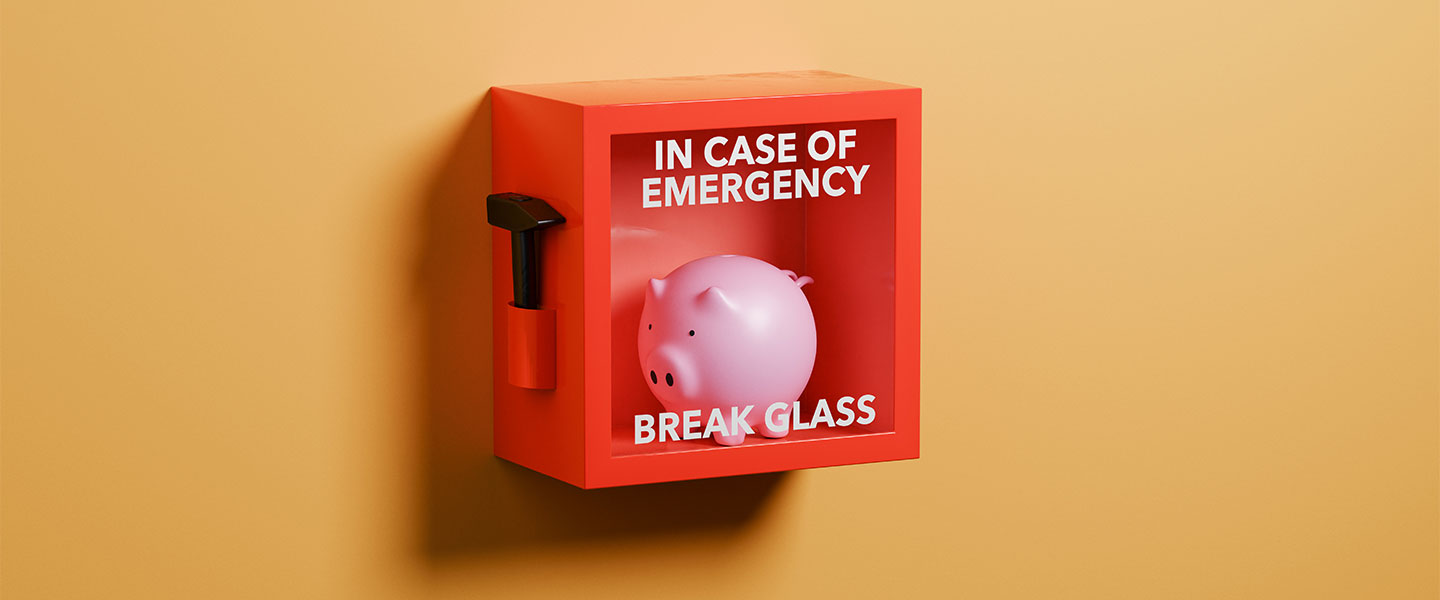
In our previous article on budgeting your first paycheck, we introduced the 50/30/20 rule as a simple way to manage your money. Within this framework, the 20% set aside for savings isn’t just for future goals. It also plays a key role in building your emergency fund.
An emergency fund acts as a financial safety net when life takes an unexpected turn, whether it’s a medical bill or a family emergency. Building your emergency savings steadily can prepare you to better manage planned milestones and unplanned setbacks, especially given the rising cost of living in Singapore.
In this guide, we’ll walk you through why an emergency fund is important and how to build an emergency fund in Singapore in a practical and sustainable way.
Why young adults need an emergency fund
In your 20s, you’re just starting to build your income. CPF savings are set aside for specific purposes such as retirement and housing, and may not be readily available for short-term needs. This means you may have limited liquid cash, making it harder to handle unexpected expenses without taking on debt or disrupting your financial plans.
At the same time, life can be unpredictable. Unexpected costs and career uncertainties are more common than you might think, including:
- Unplanned medical bills from injuries or illnesses that throw off your monthly budget
- Unexpected technology costs, such as replacing a damaged laptop or phone
- Supporting family members facing job loss
Without an emergency fund, these situations can quickly become financially stressful.
While schemes like MediShield Life, MediSave and employer benefits help cover large hospital bills, they may not fully cover all costs as coverage varies depending on individual plans and circumstances. You may still need to pay upfront for:
- Deductibles and co-insurance
- Treatments not fully covered
- Dental or outpatient expenses
This is where having sufficient emergency savings becomes important.
An emergency fund provides accessible cash when you need it most. It may help you reduce reliance on high-interest debt and avoid selling investments prematurely.
What’s the difference between savings and an emergency fund?
An emergency fund may sound interchangeable with savings, but they serve different purposes. Understanding this distinction is key to building a strong financial foundation in your 20s.
Savings are set aside for planned expenses, such as holidays, further education or buying a home. These goals are typically well-defined with a clear timeline and target amount in mind. On the other hand, an emergency fund is meant for unplanned expenses when you need urgent access to cash.
In short, savings help you achieve your goals while an emergency fund helps protect your financial stability when life does not go as planned. Keeping them separate ensures your emergency fund is available when you need it most.
|
|
Emergency fund
|
Savings
|
|
Purpose
|
Covers unexpected, urgent expenses
|
Supports set goals
|
|
Typical amount
|
3–6 months’ worth of essential living expenses
|
Varies based on goals and timelines
|
|
When to use
|
During emergencies affecting income or essential spending
|
When ready to pay for planned expenses
|
|
Access
|
Kept in highly liquid accounts for quick, immediate access
|
Accessible but may be spread across different accounts, such as fixed deposits
|
|
Mindset
|
A financial safety net for unexpected situations
|
A tool to achieve future goals and lifestyle plans
|
|
Examples
|
- Medical, dental or vet bills
- Urgent replacement of a broken phone or laptop
- Family emergencies
|
- Home downpayment or renovation
- Further education
- Holiday fund
|
How much should you set aside in an emergency fund?
A general guideline is to set aside three to six months’ worth of essential living expenses. This covers basic needs such as housing, food and utilities if your income is disrupted.
However, this range is not fixed. The amount you set aside will depend on your personal situation.
- How stable is your income?
- How much do you spend each month?
- Do you have dependents, debt repayments such as student loans or other responsibilities?
For example, someone with a regular salary and fewer financial commitments may be comfortable with a smaller buffer. Someone who is freelancing, doing gig work or doesn’t qualify for insurance coverage may need to build a larger one.
How can you start saving for your emergency fund?
Saving a few months’ worth of expenses can feel overwhelming when you’ve just started working. Trying to build your emergency fund too quickly can lead to stress, especially if you’re already managing daily expenses, CPF deductions or helping your family.
A more practical approach is to start small and stay consistent.
- Work out how much you can save monthly from your take-home salary (after CPF deductions). A simple guide is the 50/30/20 rule, where 20% goes into savings. If that feels too ambitious, start with a smaller amount. What matters is building a habit.
- Begin with a “starter” emergency fund. Start with one month of essential expenses as a basic financial buffer and build on this as your income grows.
- Grow your fund over time. Saving three to six months of expenses may take time, and that’s okay. The key is steady progress and building financial security at your own pace.
How can you stay consistent with saving?
Consistency is what grows small contributions into a meaningful safety net. These best practices can make it easier to save consistently over time:
- Change your mindset. Think of your emergency fund as a fixed expense like rent or utilities, rather than something optional. When saving becomes non-negotiable, it is easier to prioritise financial stability.
- Automate your savings. For example, the UOB TMRW app lets you set up a recurring monthly transfer from your main account into a separate account for emergency funds. This “save before you spend” approach helps prevent impulse purchases.
- Track your spending. Personalised insights on TMRW help you spend within your means, pay bills on time, and stay in control of your finances. The app breaks down your card spending by category, allowing you to easily compare your spending this month with your average over the past five months.
Where should you keep your emergency fund?
Your emergency fund should be easy to access but kept in a separate account from your everyday spending. This helps reduce the temptation to spend it on non-urgent expenses, while allowing you to use it quickly when needed.
Savings accounts are a practical option. They allow you to withdraw funds anytime while earning some interest, making it suitable for short-term needs.
You may also consider lower risk options such as Singapore Savings Bonds (SSBs), which are backed by the Singapore Government and provide interest that increases over time. You can sell your SSBs in any month without penalty to receive your investment principal together with accrued interest.
When should you dip into your emergency fund?
Your emergency fund should only be used for expenses that are unexpected, urgent and necessary. It is meant for situations like large medical bills, when you need immediate financial support to stay afloat.
Avoid using your emergency fund for everyday or lifestyle spending. Planned purchases, holidays or upgrading gadgets should be paid for using your regular savings instead. Keeping this discipline is an important part of financial planning, especially with the rising cost of living.
What happens after you use your emergency fund?
Wiping out your emergency fund may feel like a setback, but it is important to remember that you built it for moments like these. Your emergency savings are meant to help you manage unexpected situations without added financial stress.
- First, take some time to reflect on your recent experience. Did your emergency fund fully cover your essential expenses, or did you find it falling short?
- Next, decide whether you need to adjust your target amount. This allows you to be more prepared for future emergencies.
- Finally, start rebuilding gradually by setting aside a manageable portion of your monthly income. Even small, consistent contributions will help you restore your financial safety net over time.
How often should you review your emergency fund?
Your emergency needs will change as your life evolves. Changes that can affect how much emergency savings you should have include:
- Salary increases
- Career moves
- New family responsibilities
- Mortgage or loan repayments
Regular reviews help ensure your emergency fund stays relevant, sufficient and aligned with your financial goals. As a guide, review your emergency fund at least once a year.
- Start by recalculating your monthly essential expenses such as housing, food, transport and insurance.
- Next, compare this with your current emergency fund balance.
- If there’s a gap, update your savings plan and work towards closing it gradually.
A rainy day fund for life’s ups and downs
An emergency fund is one of the most practical tools in financial planning. It provides a reliable buffer to help you navigate life’s expected events without derailing your long-term goals.
By starting early, contributing consistently, and using emergency savings only when truly needed, you build a strong financial foundation. Over time, this discipline helps you stay resilient through changes in income, expenses and life circumstances.
How financially prepared are you? Take the UOB Financial Health Check: https://www.uob.com.sg/personal/finlit/articles/financial-health-check.page
The information contained in this publication is provided for general information purposes only and does not take into account your specific investment objectives, financial situation or particular needs. It shall not be regarded as an offer, recommendation, solicitation or advice to buy or sell any investment product.
Nothing in this publication constitutes accounting, legal, regulatory, tax, financial or other advice. You should consider whether the information is appropriate to your individual circumstances and, if in doubt, seek independent professional advice. If you choose not to seek financial advice, you should carefully consider whether the information is suitable for you.
The information contained in this publication, including any data, projections and underlying assumptions, is based on certain assumptions, management forecasts and analysis of currently available information, and reflects prevailing conditions as of the date of publication. Such information is subject to change at any time without notice.
Although every reasonable care has been taken to ensure the accuracy and objectivity of the information contained herein, United Overseas Bank Limited (“UOB”) and its employees make no representation or warranty of any kind, express or implied, and shall not be responsible or liable for the accuracy, completeness or reliability of the information. UOB shall not be liable for any loss or damage arising from any reliance on the information herein.
This publication is not intended for distribution to, or use by, any person in any jurisdiction where such distribution or use would be contrary to applicable law or regulation.